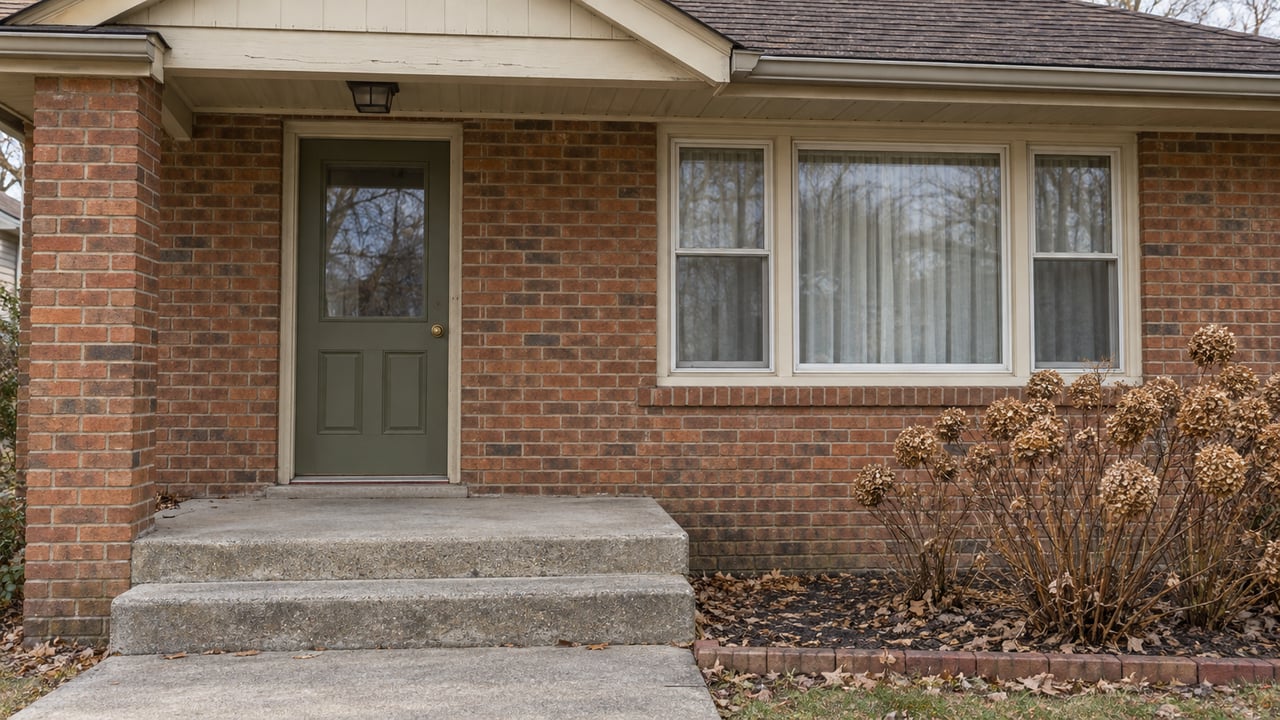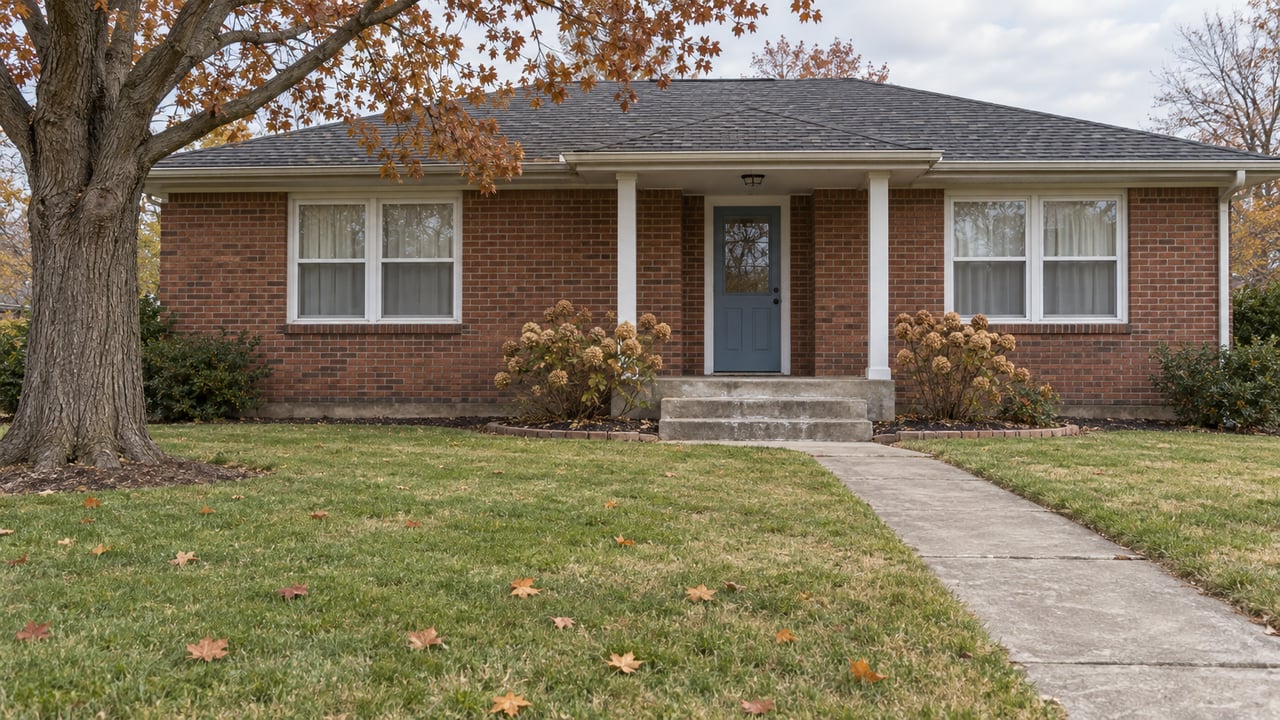
The property tax figure on an Anderson listing comes from someone else's bill. It shows the seller's deductions under that year's state schedule. Under Indiana's 2025 property tax law, Senate Enrolled Act 1, the schedule now changes every year through 2031. The revenue that law takes off homestead bills is meant to come back to local governments through a rebuilt local income tax that starts in 2029. A buyer comparing Anderson with other towns needs two numbers: what the house costs in property tax, and what living at that address may cost in income tax.
The Madison County fall installment is due November 10, 2026. Bills paid this year are the first under the new rules, so they're the right place to start.
What the 2026 Bill Already Reflects
The Indiana Department of Local Government Finance labels bills by two years, the assessment year and the payment year. The bills due this fall are "2025 pay 2026" bills. For those bills, the state replaced the old homestead standard deduction with a flat $48,000. The old one was the lesser of 60% of gross assessed value or $48,000. A supplemental homestead deduction of 40% then applies to the assessed value left after the standard deduction.
On top of those deductions, owners who qualify for the homestead standard deduction now get a new credit. It equals 10% of the property tax bill or $300, whichever is less. According to the DLGF's deductions and credits guide, no one has to apply for it, because county auditors identify eligible property and apply the credit.
Non-homestead residential property, which includes rentals, gets a different new deduction. It's 6% of assessed value for pay 2026, and it isn't on the list of property types that receive the homestead credit. Two Anderson houses with the same assessed value can have different bills depending on whether each is a homestead or a rental. That matters for anyone looking at Anderson's older rental stock as a first home, and for investors whose numbers depend on the bill a previous owner-occupant paid.
A Schedule That Moves Every Year
The 2026 bill is one year of a six-year phase-in. The homestead standard deduction shrinks each year, and the percentage-based deductions grow:
| Pay year | Homestead standard deduction | Supplemental homestead deduction | Non-homestead residential deduction |
|---|---|---|---|
| 2026 | $48,000 | 40% | 6% |
| 2027 | $40,000 | 46% | 12% |
| 2028 | $30,000 | 52% | 19% |
| 2029 | $20,000 | 57% | 25% |
| 2030 | $10,000 | 62% | 30% |
| 2031 and after | $0 | 66.7% | 33.4% |
The DLGF guide lists the standard deduction by assessment date, from $40,000 for the 2026 assessment down to zero for assessment dates after December 31, 2029. The table shows each figure in the year the bill is paid, so it lines up with the bills a buyer actually sees.
A flat dollar deduction and a percentage deduction affect houses at different price points in different ways. Because one is falling and the other rising, this year's bill won't predict the next one. SEA 1 also limits how much local budgets can grow. It sets the maximum levy growth quotient at 4% for 2026, and a unit's property tax levy generally can't exceed its prior-year levy unless its fiscal body adopts an increase by ordinance. Even so, a buyer reading a seller's 2026 bill is looking at a formula that changes the following year.
What Anderson Gives Up, in Its Own Numbers
The city has already calculated the cost. The Herald Bulletin reported on the proposed $48 million 2027 city budget. Mayor Thomas Broderick Jr. said Anderson would lose $1.8 million in property tax revenue in 2027 because of the state's property tax relief program. The same budget includes one-time spending of $1 million on park improvements and $1 million on contractual paving, according to City Controller Doug Whitham. The paper later reported that the Anderson City Council approved the 2027 budget.
The mayor also explained where the replacement money is supposed to come from. Under the state's new structure, he said, Anderson's local income tax rate would be capped at 1.2%, while the city needs 1.8% to cover the cost of city services in the future. His stated goal is to get the county to agree to a local income tax rate of 2.9%.
Why City Limits Show Up in the Math in 2029
Indiana's local income tax works differently today. In a statewide report the Herald Bulletin carried, county councils currently set a single countywide rate of up to 3.75%. That rate applies to every resident, including people who live in cities and towns, and the money is split among local units by a locally set formula. SEA 1 allows cities and counties to set their own separate rates of up to 1.2% each. If both used the maximum, someone living inside a city would pay a combined 2.4% to cover the city and county rates.
The overhaul was originally set for 2028. Lawmakers passed House Bill 1210, which moved it to 2029 to allow more time to review how the law actually affects local governments. Jennifer Simmons, chief operating officer of Accelerate Indiana Municipalities, told the paper the changes are "creating a lot of chaos in the system right now." Sen. Travis Holdman, who chairs the Senate Tax and Fiscal Policy Committee, said at a committee meeting, "Contrary to our efforts to put everybody in the same box, it just doesn't work that way."
This is where the reform affects a home search. Under the countywide system, a household's local income tax rate is generally the same anywhere in Madison County. When cities can levy their own rate, an Anderson address may carry one more income tax rate than an address in the unincorporated parts of the county. The amount depends on decisions the city council and county officials haven't made yet. The mayor's numbers show which way Anderson is leaning.
Madison County's current structure shows how hard those decisions are. When the county council worked on its 2026 distribution, the countywide rate was 2.25%, with 0.5% going to property tax relief. Council President Scott Green proposed cutting the relief share to 0.25%, which he expected to bring in about $3 million more for the county. The Town of Pendleton requested an analysis from Reedy Financial Group, which found the change would hurt funding for local schools, and the council took no action. "A decision requires us to have the best information available," Green told the Herald Bulletin. In Madison County, a change to local income tax affects schools and libraries along with the city, so rate questions get argued in public before they're settled.
Questions to Bring to a Showing in Anderson
Taken together, a buyer comparing Anderson with nearby towns can ask these questions about any property:
- Which pay year is on the bill? A 2026 bill reflects the $48,000 standard deduction and the 40% supplemental deduction. Next year's bill uses $40,000 and 46%.
- Was the house a homestead or a rental for the seller? That status decides whether the bill shows the homestead credit or the 6% non-homestead deduction.
- Is the address inside Anderson's city limits? For now, local income tax runs countywide. Starting in 2029, the city can set its own rate.
- What has the city council decided by then? The mayor's 1.8% figure is a stated need, not an adopted rate, and the county's role is still part of the discussion.
The Madison County auditor and treasurer can confirm a specific parcel's deductions and credits. This post is general information, not tax, legal, or financial advice, so please confirm your own situation with a qualified tax professional.
Anderson Property Tax FAQ
Do I need to apply for the new $300 homestead credit? According to the DLGF guide, you don't. If you qualify for the homestead standard deduction, the county auditor identifies your property and applies the credit to your bill.
When does the local income tax change take effect? The overhaul to separate city and county rates now begins in 2029, after House Bill 1210 delayed it from 2028.
When is this fall's Madison County property tax payment due? The Madison County Treasurer lists November 10, 2026, as the fall installment due date.
When we price an Anderson home with sellers or compare addresses with buyers, we look at where the house sits on this six-year schedule and which side of the city line it's on, along with the asking price. If you're weighing an Anderson address against one elsewhere in Madison County, The Slavin Property Group can go through the tax bill on a specific property with you. Request Your Free Home Valuation to start with a figure based on your own address.