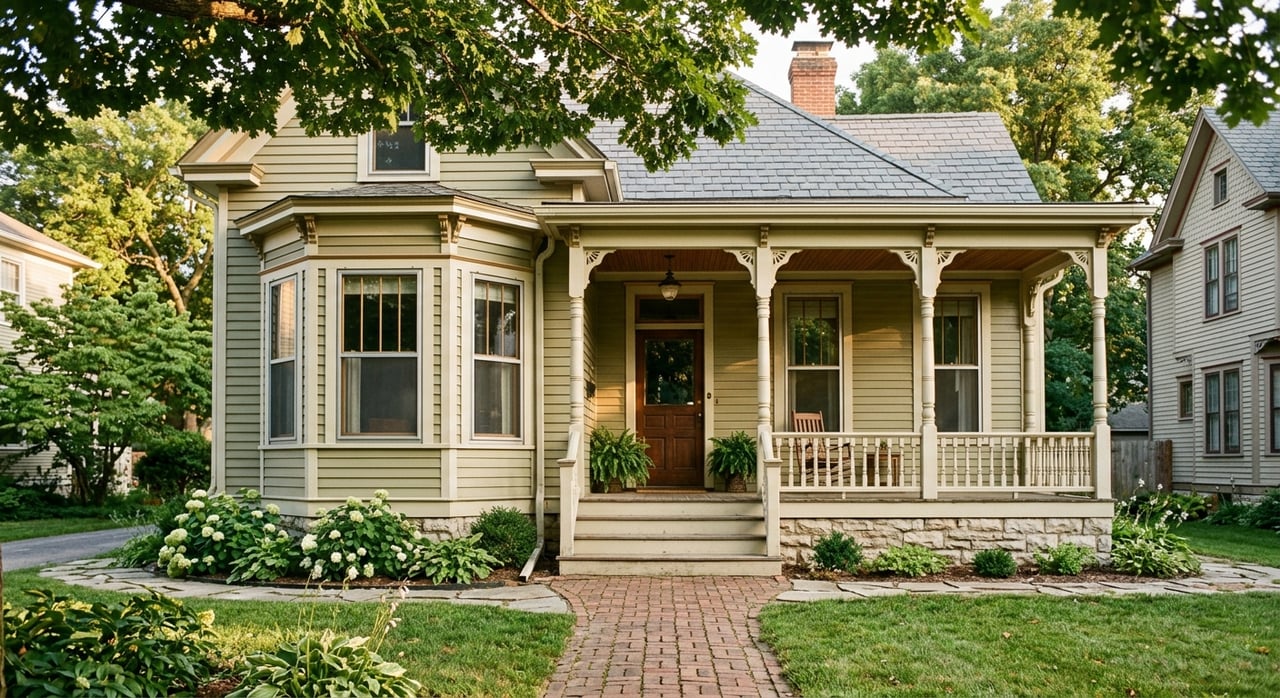
Thinking about buying a historic home in New Castle, Indiana? It can be an exciting way to own a property with real character, but it also comes with questions about condition, renovations, permits, and long-term value. If you want charm without surprises, it helps to understand how New Castle’s historic areas work before you make an offer. Let’s dive in.
Where historic homes are found in New Castle
New Castle has five historic districts within city limits: South Main Street Historic District, New Castle Commercial Historic District, South 11th Street Historical District, Maplewood Historic District, and Audubon Historic District. Each area has its own look and feel, which can shape the kind of home you may find.
South Main Street is described by the city as one of the first areas to develop south of downtown, with large homes on wide streets. South 11th Street is known as an early-20th-century neighborhood with more modest homes set closer to the street. Maplewood and Audubon include early-to-mid-20th-century housing, larger lots, and mature landscaping, while the Commercial Historic District covers the downtown core.
City planning documents also highlight Broad Street from State Road 3 to 11th Street as a conservation corridor tied to the historic district gateway. The blocks around 10th and Broadway, plus the residential neighborhood south of Indiana Avenue along Main Street, are also treated as important transition areas. If you want downtown-adjacent character, these areas are worth watching.
What styles you may see
One of the biggest surprises for buyers is that New Castle’s historic housing stock is not all one style. Instead, you are more likely to find a mix of late-19th-century, turn-of-the-century, and early-20th-century homes.
In the downtown commercial core, historic buildings are often Italianate, Classical Revival, and Commercial in style. In residential areas, records show examples such as Tudor Revival homes on South Main Street, an Italianate mansion on South Main, and a Spanish Eclectic residence on Hawthorn Road. That mix means your search may be less about finding one exact architectural type and more about finding the right combination of layout, condition, and historic detail.
How district rules can affect your purchase
If a property is located in the New Castle Historic District or the Phase One Historic District, the Historic Preservation Commission oversees renovation, demolition, and new construction. The city states that a Certificate of Appropriateness, often called a COA, is required before the building department will issue a permit.
This matters because even work that feels minor may need review. According to the city’s guidance, routine maintenance that keeps the same material and appearance still needs COA approval. If you are considering replacing windows, changing siding, updating exterior trim, or altering a façade, you will want to confirm the approval process early.
For buyers, this is not necessarily a drawback. It simply means you should go in with clear expectations. Historic district rules are designed to preserve compatibility in style, form, proportion, texture, and material, so your renovation plans should match those standards.
Why paperwork matters with older homes
When you buy a historic property, condition is only part of the picture. You also want to know whether prior exterior work was handled properly and whether the home has a clean record for approvals and permits.
A well-documented home can give you more confidence about what has been changed over time. If updates were made in a historic district, it is helpful to know whether they were reviewed and approved. Keeping that paper trail organized can also help if you decide to make improvements or sell in the future.
Inspections deserve extra attention
Historic homes can be rewarding to own, but age often brings added maintenance concerns. That is why inspections are especially important when you are buying an older property in New Castle.
The Consumer Financial Protection Bureau recommends scheduling a home inspection as soon as possible after choosing a house. In a historic home, this step can help you better understand the condition of major systems and identify repair priorities before you close.
Older homes may also have health and safety issues that need a closer look. The EPA says older homes are more likely to contain lead-based paint, and scraping, sanding, or heating that paint can create hazardous dust. For homes built before 1978, it is wise to ask more questions about paint condition and use lead-safe certified contractors if renovation work is needed.
Renovation planning before you buy
If you love historic character, it is easy to focus on original trim, hardwood floors, and curb appeal. But before you move forward, it helps to look at the home through the lens of a renovation budget.
Ask yourself a few practical questions:
- Which repairs are immediate, and which can wait?
- Are the exterior features you want to change subject to district review?
- Has the property been maintained consistently?
- Do the updates already completed fit the home’s historic character?
- Can your budget handle both cosmetic work and system upgrades?
The strongest historic-home candidates are often the ones with intact exterior character, visible maintenance, and realistic repair needs. A house with charm and a manageable scope of work is usually easier to enjoy than one with hidden issues and an overly optimistic budget.
Financing options for historic homes
If the house needs work, you may have more financing paths than you expect. Several renovation-friendly loan programs can help buyers combine purchase costs with rehabilitation expenses.
HUD’s Section 203(k) program can cover the purchase or refinance of a home, plus rehabilitation, as long as the home is at least one year old. Conventional renovation options also exist through Fannie Mae’s HomeStyle Renovation program and Freddie Mac’s CHOICERenovation program. These can be worth exploring if you are buying a home that needs meaningful updates.
For some owner-occupied historic homes, Indiana also offers a residential historic rehabilitation tax credit. According to the Indiana Department of Natural Resources, the property must be at least 50 years old, owner-occupied as your primary residence, and either individually listed in the Indiana Register of Historic Sites and Structures or be a contributing resource in a listed district. Qualified rehabilitation costs must exceed $10,000, and the credit equals the lesser of $10,000 or 20% of qualified rehabilitation expenditures, subject to the program’s annual cap.
If you are looking at a downtown mixed-use or income-producing property, a different incentive may apply. Indiana’s DNR states that the federal Historic Tax Credit offers a 20% income tax credit on qualified rehabilitation expenses for eligible income-producing buildings. That is more relevant to commercial, mixed-use, or rental projects than to a typical owner-occupied single-family home.
A local incentive for downtown properties
New Castle also has a local façade matching grant program for the Historic Downtown District. Current guidelines say the city can reimburse up to 50% of eligible façade renovation or historic-preservation costs, up to $15,000.
The owner must first obtain Historic Preservation Commission approval. This program is most relevant to downtown properties rather than detached residential homes outside the core, but it may matter if you are considering a commercial building or mixed-use property in the historic downtown area.
Matching neighborhoods to your goals
Different parts of New Castle can fit different buying goals. Understanding those differences can help you narrow your search and avoid chasing homes that do not match your lifestyle or budget.
If you want a larger turn-of-the-century home, South Main Street may be the best fit. If you prefer a denser early-20th-century setting with modest homes, South 11th Street may make more sense. If larger lots and a more natural setting matter most, Maplewood and Audubon are often strong areas to explore.
If you like historic character near downtown, Broad Street and Main Street corridors may offer the right mix of location and architectural interest. These areas can appeal to buyers who want proximity to the core while still enjoying older homes and streetscapes.
What helps resale later on
When you buy a historic home, you are not only buying for today. You are also buying with future resale in mind. In New Castle, buyers are often drawn to homes that combine historic charm with practical updates.
That usually means intact exterior character, solid maintenance, updated systems, and documented improvements. Buyers may love original details, but they also want confidence that the home has been cared for and that major work was done thoughtfully. If you keep those factors in mind during your search, you will be better positioned both now and later.
Buying a historic home in New Castle can be a smart and satisfying move when you approach it with clear expectations. The right home is often the one that balances architectural character, manageable upkeep, and a renovation plan that fits both local rules and your budget. If you want guidance as you compare neighborhoods, evaluate condition, or weigh the long-term upside of an older property, Steve Slavin can help you make a confident next step.
FAQs
What historic districts should buyers know in New Castle, Indiana?
- Buyers should know the city identifies five historic districts: South Main Street Historic District, New Castle Commercial Historic District, South 11th Street Historical District, Maplewood Historic District, and Audubon Historic District.
What architectural styles appear in New Castle historic homes?
- Buyers can expect a mix rather than one uniform style, including Italianate, Classical Revival, Commercial, Tudor Revival, and Spanish Eclectic examples across different parts of the city.
What is a Certificate of Appropriateness in New Castle?
- A Certificate of Appropriateness is city approval required for work in certain historic districts before the building department will issue a permit, including some routine exterior maintenance.
What inspection issues matter when buying an older home in New Castle?
- Buyers should pay close attention to the condition of major systems, deferred maintenance, and potential lead-based paint concerns in older homes, especially those built before 1978.
What tax credit may apply to a historic home in Indiana?
- Indiana offers a residential historic rehabilitation tax credit for eligible owner-occupied historic homes that meet age, listing, use, and spending requirements.
Are there grants for historic properties in downtown New Castle?
- Yes, New Castle has a façade matching grant program for the Historic Downtown District that can reimburse up to 50% of eligible costs, up to $15,000, with prior approval required.