If you are looking at redevelopment opportunities in Anderson, Indiana, the biggest wins usually come from seeing the full picture before you ever make an offer. A building may look promising from the street, but zoning, permit requirements, environmental history, and incentive eligibility can change the deal fast. The good news is that Anderson gives you several clear signals to follow, and if you know where to look, you can spot stronger opportunities with less guesswork. Let’s dive in.
Why Anderson Draws Redevelopment Interest
Anderson offers a price point that gets attention from buyers, investors, and small developers who want to stay disciplined on basis. According to the U.S. Census Bureau’s Anderson city profile, the 2024 population estimate was 55,851, the median household income was $46,909, the median value of owner-occupied homes was $119,000, and median gross rent was $925.
Those numbers matter because they suggest a market where redevelopment can work, but only when your assumptions stay realistic. In a modest-price market, it is especially important to match your purchase price, renovation scope, and exit strategy to what the local market is likely to support.
Location also helps Anderson stand out. The city sits along the I-69 corridor and is about 38 miles from Indianapolis and about 22 miles from the I-465 freeway hub, according to Anderson Economic Development’s location overview. That regional access can support redevelopment tied to downtown activity, commercial services, industrial reuse, and commuter-oriented demand.
Start With Anderson’s Priority Areas
One of the smartest ways to screen opportunities is to focus first on the places the city already highlights for investment. In Anderson, downtown is a clear example.
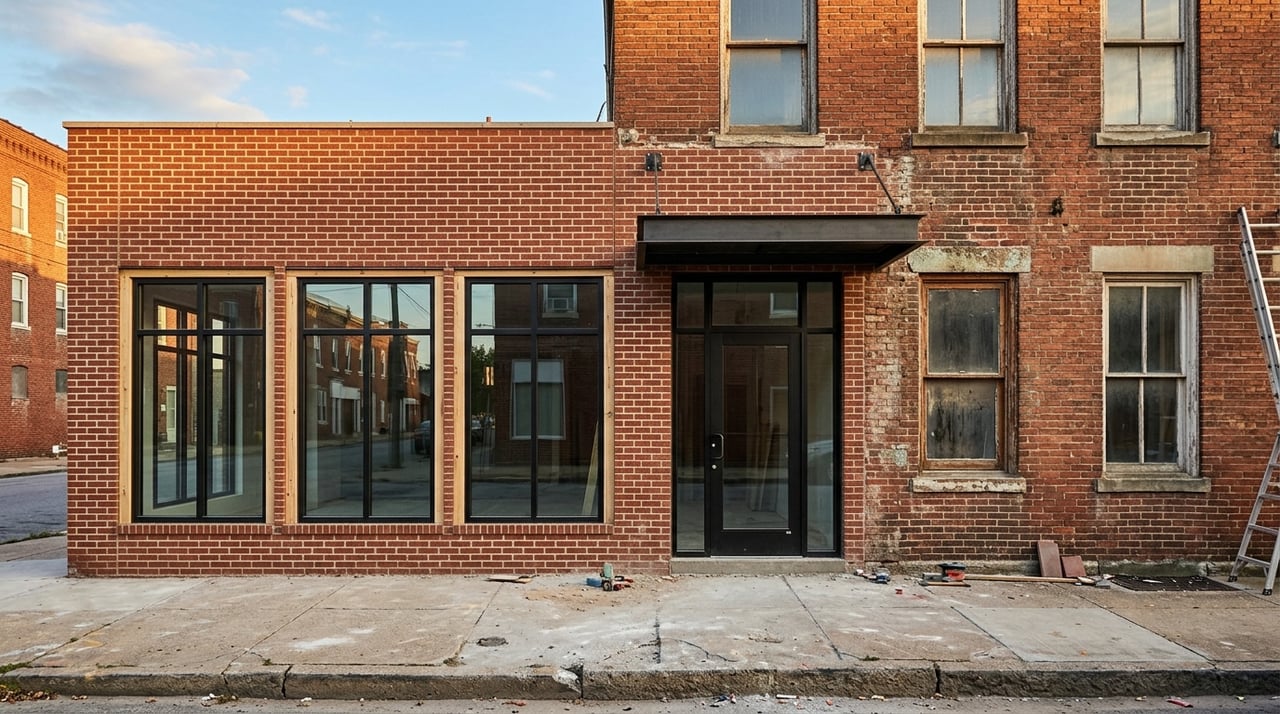
The city’s downtown redevelopment page points to walkable downtown investment, arts and culture, dining, retail, and the Central Business District as key priorities. That makes downtown properties especially relevant when you are considering adaptive reuse, mixed-use projects, or upper-floor residential conversions above storefronts.
Another major category is brownfield redevelopment. Anderson says it has roughly 150 brownfield properties covering about 800 to 1,000 acres, including former industrial sites, dry cleaners, bulk fuel sites, and gas stations. That is a strong clue that many redevelopment opportunities here involve more than surface-level updates.
In other words, some of Anderson’s best opportunities may come with extra complexity. If a property has location, size, or reuse potential, you may need to weigh environmental review, title questions, remediation planning, or a longer approval timeline as part of the opportunity itself.
Know Which Property Types Fit Best
Not every older building is a redevelopment candidate, and not every vacant site supports the same future use. In Anderson, your first filter should be what the zoning actually allows.
The city’s 2024 zoning guide lays out residential districts R1 through R4, business districts B1 through B6, and industrial districts I1 through I3. That framework can help you narrow your search quickly and avoid chasing sites that do not align with your concept.
Older Homes and Multifamily Conversions
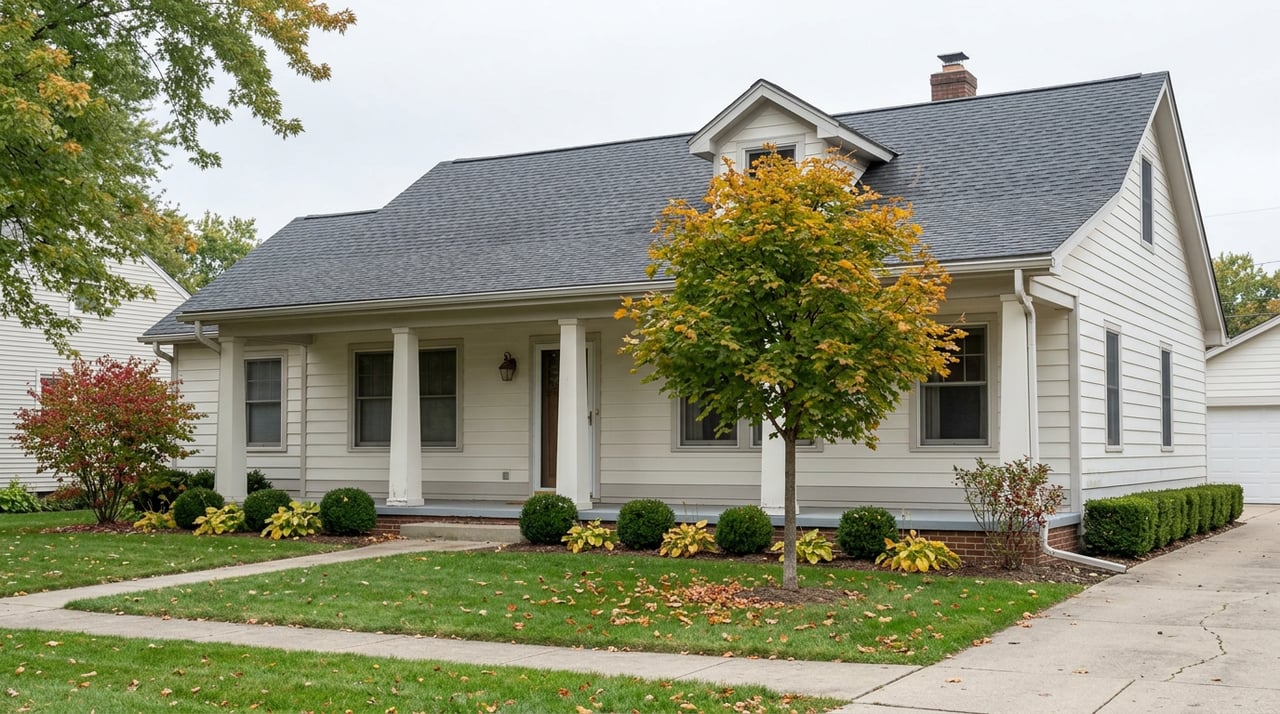
The zoning guide notes that R4 includes many older homes that may be suitable for conversion to multifamily use. It also states that two-family and multifamily dwellings are allowed in B1 and B2, while B4 does not allow residential uses.
That makes older in-town housing stock and select business-zoned properties worth a closer look when you are exploring small multifamily or mixed residential concepts. Before moving ahead, though, you still need to confirm the parcel’s current zoning and any project-specific approval needs.
Downtown Mixed-Use Buildings
Downtown Anderson can be a strong fit for storefront redevelopment with upper-floor residential or office reuse. The zoning guide defines the Downtown Central Business District boundaries as north Third Street, south of Dillon Street and the railroad tracks, east to White River, Wheeler, Fletcher, and railroad tracks, and west to Brown-Delaware Street.
That matters because location within or near the downtown core can shape what kind of redevelopment is practical. If you are comparing two older commercial buildings, the one inside that downtown framework may offer a more natural path for adaptive reuse than a more auto-oriented site outside it.
Industrial and Commercial Reuse
Industrial-looking properties can be appealing, but they require careful screening. Anderson’s zoning guide makes clear that I1, I2, and I3 are not interchangeable.
In I1, residences and businesses are allowed. In I2, both dwellings and businesses are excluded. In I3, the district is intended for planned industrial development, industrial use may require special exception treatment, and business use is not permitted. That means you should never assume a vacant industrial parcel can support a broad redevelopment plan without checking the district rules first.
Watch for Historic Review Requirements
Older buildings can be attractive redevelopment targets because of their character, location, or construction quality. In Anderson, some of those properties may also fall under historic review.
The city’s Historic and Cultural Preservation Commission reviews restorations and rehabilitation work in the West Central Historic District, the West Eighth Street Historic District, and at individual historic sites. If your target property is in one of those areas, review requirements can affect both timeline and design decisions.
That does not automatically make a project less appealing. In some cases, historic status may support a stronger finished product or align with available tax credit programs, but it does mean your planning needs to be thorough from day one.
Understand the Approval Path Early
One of the most common redevelopment mistakes is treating permits and city review as a late-stage task. In Anderson, that can create expensive delays.
The city’s Zoning & Development division acts as part of the Municipal Development Department’s one-stop-shop approach for developers. It administers zoning, subdivision, and signage rules, handles improvement location and signage permits, and routes site and plat review materials to the Plan Commission, Board of Zoning Appeals, and City Council as needed.
The zoning guide also states that no structure, improvement, or land use may be altered, changed, placed, erected, or located without an Improvement Location Permit, and that each application must include a scaled site plan. It also requires a Certificate of Occupancy before a building or use may be occupied.
For you, that means permit readiness is part of feasibility, not an afterthought. A deal that looks attractive on paper can become far less attractive if the site plan, use, access, or improvement scope is not ready for review.
Condition and Compliance Matter Too
Anderson’s Permit Center handles common redevelopment permit types including remodeling, demolition, utility service connections, roofing, windows, doors, and additions. At the same time, code enforcement and nuisance control may require repairs or action on unsafe or neglected properties.
That is especially relevant for vacant and distressed assets. If a property has deferred maintenance, debris issues, or safety concerns, your timeline and budget may need to account for compliance work before stabilization even begins.
Floodplain Sites Need Extra Diligence
Parcels near the White River or other low-lying areas deserve closer review. The zoning guide says floodway and floodway-fringe situations may require additional state review before local permit approval can move forward.
That added step can affect both cost and timing. If a site seems well priced but sits near the river or in a low area, flood status should be one of your earliest checks.
Use Incentives to Improve Feasibility
In Anderson, incentives can make a meaningful difference, especially on projects with tighter margins or larger predevelopment costs. The key is knowing which tools fit your property type and location.
Tax Abatement Opportunities
According to Anderson’s tax abatement page, the city offers up to a 10-year partial tax abatement on increased assessments from real property improvements. Vacant building tax abatement may also apply if a commercial or industrial building has been unoccupied for at least one year.
The city says this incentive is available only within corporate limits and in designated Economic Revitalization Areas. That makes location screening especially important before you underwrite a project around potential tax savings.
State and Local Redevelopment Tools
Anderson’s local incentives page highlights Tax Increment Financing, industrial revenue bonds, the Municipal Riverfront District, New Market Tax Credits, and tax abatement. The same source notes that TIF can be used for development costs, while the riverfront district can reduce liquor licensing costs for downtown properties.
The city also describes the Community Revitalization Enhancement District credit as a 25% credit on qualified investment that reduces state and local tax liability, and it says the credit can be assigned to a lessee. For the right project, that can become an important part of the capital stack.
Brownfield and Historic Resources
Because Anderson has a large brownfield inventory, the Indiana Brownfields Program is an important resource to know. The program provides educational, financial, technical, and legal assistance, including tools such as Phase I environmental site assessment assistance and liability clarification requests.
For historic or adaptive-reuse projects, the federal Historic Tax Credit and Indiana redevelopment-related tax credit resources may also be relevant. The federal Historic Tax Credit offers a 20% income tax credit on qualified rehabilitation expenses for historic, income-producing buildings, and Indiana’s redevelopment-related credit framework can apply to certain vacant or underutilized land and buildings.
Screen Smarter Before You Commit
Good redevelopment opportunities usually reveal themselves through a handful of practical checks. In Anderson, one of the most useful tools is the city’s Map Center, which includes maps for CRED, NMTC-eligible census tracts, TIF districts, Opportunity Zones, riverfront districts, and historic districts.
That gives you a faster way to sort properties by possible incentive eligibility before you spend heavily on due diligence. It can also help you compare two similar sites and see which one may have a better path to feasibility.
A Simple Screening Checklist
Before you get too far into a deal, it helps to answer a few key questions:
- Is the property in a zoning district that supports your intended use?
- Is it inside downtown, a historic district, or an incentive area?
- Does the property appear to have brownfield or environmental history?
- Will the project require major site-plan work or discretionary approvals?
- Is the building vacant, unsafe, or subject to compliance issues?
- Is the site near the White River or another area that may trigger flood-related review?
- Do local rents, sale prices, or business demand support the renovation budget?
If several of those answers are uncertain, the opportunity may still be worth exploring, but you should price that uncertainty into your plan.
Keep Your Underwriting Grounded
Anderson can offer real redevelopment upside, but disciplined underwriting matters. In a market with modest home values and rents, the strongest deals are often the ones where the acquisition cost, renovation budget, permit path, and incentive strategy all fit together cleanly.
That is why many of the most compelling local opportunities fall into a few practical categories: downtown storefront and upper-floor conversions, older multifamily or conversion-friendly housing in R4 or select B1 and B2 areas, brownfield-adjacent industrial or commercial reuse, and historic rehabilitation where credits or district context can support the plan. The challenge is not just finding a building with potential. It is finding one with a realistic path from concept to completion.
If you want help evaluating a redevelopment property in Anderson or comparing it with other opportunities in East-Central Indiana, Steve Slavin can help you assess location, market context, and next-step strategy with a practical, data-driven approach.
FAQs
What types of redevelopment opportunities are most common in Anderson, Indiana?
- Common opportunities include downtown storefront buildings with upper-floor conversion potential, older homes in R4 that may suit multifamily conversion, select B1 and B2 properties that allow residential uses, and brownfield or industrial reuse projects that need deeper due diligence.
How do zoning rules affect redevelopment in Anderson, Indiana?
- Anderson’s zoning guide separates residential, business, and industrial districts, and each one allows different uses. For example, B1 and B2 can allow multifamily uses, while B4 does not allow residential uses, and industrial districts I1, I2, and I3 have very different rules.
Are there tax incentives for redevelopment projects in Anderson, Indiana?
- Yes. Anderson highlights tools such as tax abatement, TIF, the Community Revitalization Enhancement District credit, New Market Tax Credits, and riverfront-related incentives, depending on the property and location.
What should you check before buying a brownfield property in Anderson, Indiana?
- You should review the property’s environmental history, potential remediation needs, permit path, title issues, and whether state resources like the Indiana Brownfields Program may help with early assessment or liability clarification.
Do downtown Anderson properties have special redevelopment potential?
- Yes. Downtown is a stated city priority, and the area is especially relevant for walkable mixed-use projects, adaptive reuse, arts- and retail-oriented investment, and upper-floor residential conversion.
What permits are usually needed for redevelopment work in Anderson, Indiana?
- Many projects will need an Improvement Location Permit, and occupancy requires a Certificate of Occupancy. Depending on the scope, you may also need permits for remodeling, demolition, roofing, utility work, additions, and related improvements.